
Common Risks During Industrial Rigging and Machinery Moving—and How Professionals Manage Them
Moving heavy industrial machinery is rarely as simple as lifting equipment onto a vehicle and transporting it to another location. Every project presents its own challenges, from confined working spaces and oversized loads to sensitive machinery that requires extremely precise handling. Even relatively straightforward moves demand careful planning because mistakes can result in equipment damage, costly downtime or serious safety incidents.
This is why businesses often rely on specialists with extensive experience in industrial rigging and machinery moving. Professional rigging teams understand the technical, logistical and safety considerations involved in relocating heavy equipment. Through detailed preparation and controlled execution, they are able to manage potential risks while helping projects remain on schedule and within budget.
Understanding the Complexity of Industrial Moves
Industrial equipment is often large, heavy and highly valuable. Many machines also contain delicate components that can be affected by vibration, incorrect lifting methods or poor alignment during transport.
Unlike general freight, industrial machinery frequently requires customised lifting plans, specialist transport equipment and carefully coordinated installation procedures. Each stage of the move must therefore be planned with precision to avoid unnecessary complications.
Recognising this complexity is the first step towards reducing project risk.
Risk Assessment Before Work Begins
Professional rigging projects start long before equipment is physically moved.
Experienced teams carry out detailed site surveys to identify potential hazards, assess access routes and determine the safest methods for lifting and transportation. Floor load capacities, overhead clearances, utility services and structural limitations may all be considered during this planning stage.
By identifying possible challenges early, project managers can develop solutions before work begins rather than reacting to problems once equipment is already in motion.
This proactive approach significantly reduces the likelihood of unexpected delays.
Selecting the Correct Lifting Equipment
Every machine has unique lifting requirements.
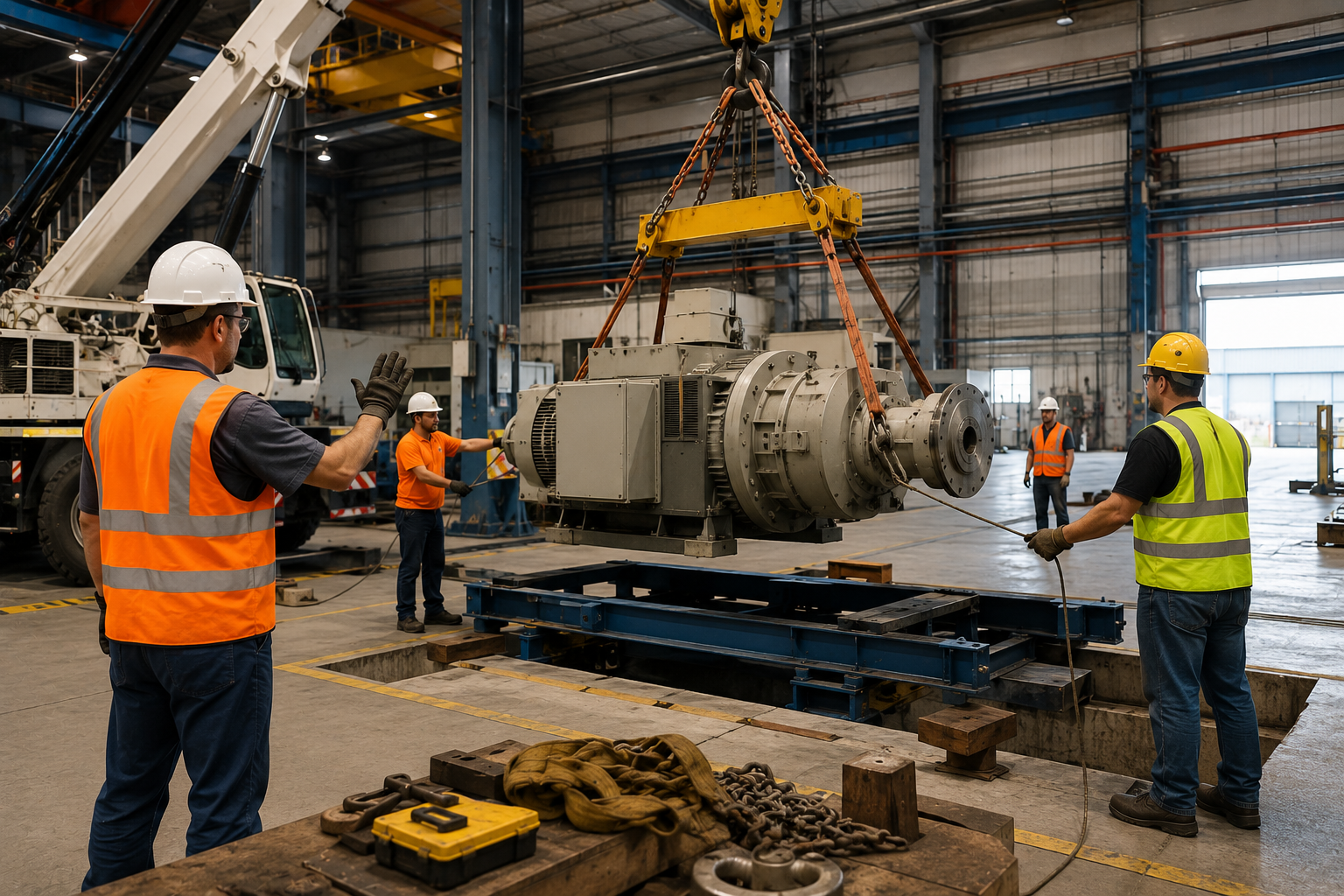
Using equipment that is too small can create obvious safety concerns, while unnecessarily oversized lifting equipment may introduce additional logistical challenges. Professional rigging teams calculate load weights, centres of gravity and lifting points before selecting cranes, gantries, hydraulic jacks, skates or forklifts appropriate for the specific task.
Matching the lifting equipment to the project helps ensure machinery remains stable throughout every stage of the operation.
Protecting Valuable Machinery
Many industrial machines represent major financial investments, making protection during relocation essential.
Before lifting begins, equipment may require partial dismantling, protective packaging or temporary reinforcement of vulnerable components. Electrical systems, hydraulic lines and other connections are carefully disconnected, labelled and documented to support efficient reinstallation later.
These precautions help minimise the risk of accidental damage during handling and transport while making recommissioning considerably easier once the machinery reaches its destination.
Managing Site Safety
Heavy lifting operations introduce numerous hazards that must be carefully controlled.
Professional contractors establish clearly defined exclusion zones, ensure authorised personnel understand their responsibilities and maintain constant communication throughout the move. Lifting operations are closely supervised, and all equipment is inspected before use to confirm it remains suitable for the planned activities.
Safety is not limited to the machinery itself. Protecting employees, contractors and visitors is equally important throughout every phase of the project.
Coordinating Multiple Contractors
Large industrial projects often involve several contractors working at the same time.
Electrical engineers, builders, equipment manufacturers and installation specialists may all require access to the same areas during different phases of the project. Without effective coordination, activities can quickly become disorganised, increasing both delays and safety risks.
Experienced project managers develop detailed schedules that allow each team to complete its work efficiently while minimising interference with others.
Good communication between contractors is often one of the key factors behind a successful relocation.
Transport Challenges
Moving machinery between facilities introduces additional risks beyond the factory floor.
Route planning, vehicle selection, load securing and delivery scheduling all require careful attention. Oversized equipment may involve specialist haulage arrangements, temporary traffic management or permits depending on the dimensions of the load.
Professional logistics planning helps ensure equipment arrives safely, on time and in the correct sequence for installation.
This level of organisation prevents unnecessary waiting time once machinery reaches the new facility.
Precision During Reinstallation
The project does not end when equipment arrives at its destination.
Machinery often requires accurate positioning, levelling and alignment before utilities can be reconnected and commissioning begins. Even small errors during installation can affect operational performance, increase wear on components or lead to future maintenance issues.
Rigging specialists use precision measuring equipment and proven installation techniques to ensure machinery is positioned according to manufacturer requirements.
Attention to detail during this stage supports reliable operation from the outset.
Preparing for Unexpected Challenges
Despite careful planning, unforeseen circumstances can occasionally arise.
Weather conditions, transport delays, access restrictions or previously unidentified structural issues may require adjustments during the project. Experienced rigging teams remain flexible, drawing on previous experience to adapt their plans while maintaining safety and minimising disruption.
This ability to respond effectively without compromising quality is one of the reasons specialist contractors are so valuable on complex industrial projects.
Experience Makes the Difference
Industrial rigging and machinery moving involves far more than lifting heavy equipment. Every successful project depends upon detailed planning, technical expertise, careful coordination and an unwavering commitment to safety.
By identifying risks before work begins, selecting the appropriate equipment and following proven installation procedures, professional rigging specialists help businesses protect valuable assets while reducing downtime and avoiding unnecessary complications. Whether relocating a single machine or an entire production facility, experienced contractors provide the knowledge and practical skills needed to complete complex projects efficiently, safely and with confidence.

